
Come What May: The Raised Bed That Teaches Me to Let Grow
Because sometimes the best harvests are the ones we never planned for.
Note: This post contains affiliate links. If you purchase through these links, I may earn a small commission at no extra cost to you. I only recommend products I personally use and trust.
Every gardener has that one bed that refuses to follow the rules.
Mine is called Come What May.
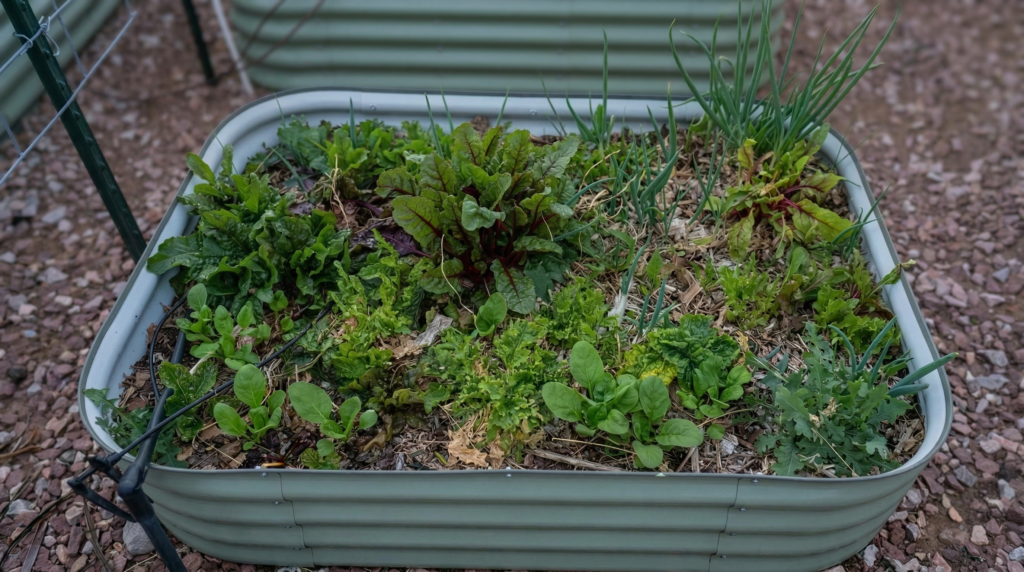
It is the raised bed where labels fade, half-used seed packets land, and mystery handfuls get tossed in without much thought. No grid. No planting diagram. No color-coded spreadsheet. Just soil, seeds, and whatever was left over from the other beds. This one started by accident, the way a lot of good things do, and it has taught more than expected about gardening, running, and what it actually means to trust a process. Right now it is waking up for spring, and the first signs are already there: baby spinach, baby chard, and other tender little greens pushing through, almost salad-ready. It is one of those quiet garden moments that feels completely unearned and entirely wonderful.
And somehow, despite the complete lack of structure, something always grows.
The Bed with No Map
When the raised beds first went in, everything had a place. Tomatoes here. Garlic there. Leafy greens in tidy rows. That structure felt right. Capable. Prepared. Like doing this gardening thing correctly.
But Come What May became the experimental corner. The overflow bed. The space where leftover carrot seeds, cilantro from a torn packet, and spinach that had no other home all ended up together. Rows rarely got marked. Spacing got eyeballed. Some seasons there was genuinely no memory of what went in there.
And yet, every season, something showed up.
Carrots tangled with ruby chard. Spinach tucked between scallions. Cilantro weaving its way through what looked like complete chaos. Honestly, it was a surprise every single time. Going out in the morning to check on the other beds, Come What May would already be quietly doing its own thing, completely unbothered by the lack of planning.
Something else stood out over time. This bed rarely has visible pest damage. While other beds occasionally struggle, Come What May just keeps going. Messy? Yes. Perfect? Absolutely not. But resilient in a way that was not expected from something with so little structure behind it. There is a lesson in that.
The Surprise of Low Pressure
At first, Come What May felt like an afterthought. Just a convenient place to put things with nowhere else to go.
Now it feels different.
Without micromanaging it, the tendency is to observe more gently. Water consistently. Check the soil. Harvest slowly and only what is ready. Less pressure for perfection, and maybe because of that, it actually flourishes. That is a lesson worth relearning in other areas of life too. Less pressure, more presence, better results.
For anyone tempted to try their own version of a Come What May bed, not much is needed to get started. A simple raised bed, quality soil, and whatever seeds call to you are enough. The beds here are set up using a 4×6 metal raised bed from Epic Gardening. What stands out about these beds: they are made with food-safe Aluzinc steel and stainless steel hardware, built to last 20-plus years, and finished with non-toxic, USDA-approved paint. They are also ethically made in Australia using green energy and steel offcut recycling, with compostable packaging designed to go straight into the bottom of the bed. For anyone who grows food to actually eat, those details matter. Their resources on companion planting and soil health have also genuinely shaped the approach here, and the YouTube channel is one to bookmark, especially when something unexpected pops up and there is no idea what it is.
Brie makes her rounds here too, inspecting the soil with great seriousness and positioning herself hopefully near the kale. She knows when it is time to move and when it is time to pause. Show up. Water. Wait. Harvest when it is ready. Some days she has that part figured out better than the rest of us.
What This Bed Taught Me About Control
The Come What May bed taught something unexpected.
You can prepare the soil, but you cannot control the season. You can plant the seed, but you cannot force the harvest.
Mixed planting can confuse pests and reduce visible damage. Diversity strengthens soil health over time. There is less stress on any single crop when the whole bed is varied and no one plant has to carry all the expectations. This bed likely thrives partly because nothing in it carries the full weight of careful planning. It just grows.
The same is true in running, and this comes from someone who has stood at five World Marathon Major start lines and learned this lesson more than once.
You can follow the training plan. You can fuel intentionally with whole foods. You can prioritize sleep and recovery and show up to every single long run on the schedule. And still, race day may not unfold the way you imagined. Wind happens. Heat happens. Your legs have opinions you did not ask for and your body makes decisions your brain did not approve.
That does not mean the work was wasted. It means you are human, doing a very human thing. The preparation still matters. The effort still counts. But the outcome belongs to the day itself, not just to you. Learning to hold both of those things at the same time is ongoing work.
The Real Harvest
Some days a search for scallions ends with whispering, “Are you there, Charlie?” Other days there is surprise cilantro or ruby chard growing somewhere completely unexpected. Everything edible finds a way to share space. A little messy and completely marvelous.
Each season, pulling a carrot that was forgotten feels both earned and unexpected at the same time. It was not planned for. Room was just made for it. That distinction has started to feel important.
A few practical things this bed has taught that carry directly into training:
Use leftover seeds instead of discarding them. Combine compatible cool-season crops and let them figure it out together. Water consistently and observe before reacting. Accept imperfection without assuming failure.
And in your running: schedule one run each week with no pace goal. Focus on fueling with whole foods that came from actual soil. Add strength work to support your joints over the long haul. Rest when needed, without making yourself explain or justify it.
Growth is not always loud. Sometimes it is quiet, steady, and happening in a corner you forgot to check on.
Come What May is a reminder that it is possible to prepare well and still release control. To train with commitment and still accept outcomes. To plant seeds without knowing exactly what will emerge.
And something will grow. It almost always does.
If there is a Come What May corner in your own life, whether in the garden, in your training, or somewhere else entirely, sharing it in the comments would be wonderful.
Sometimes the strongest harvests are the ones we simply allowed to happen.
Still growing. 🌱