
Plant-Forward Meals from the Garden: The Whatever-I-Have Formula
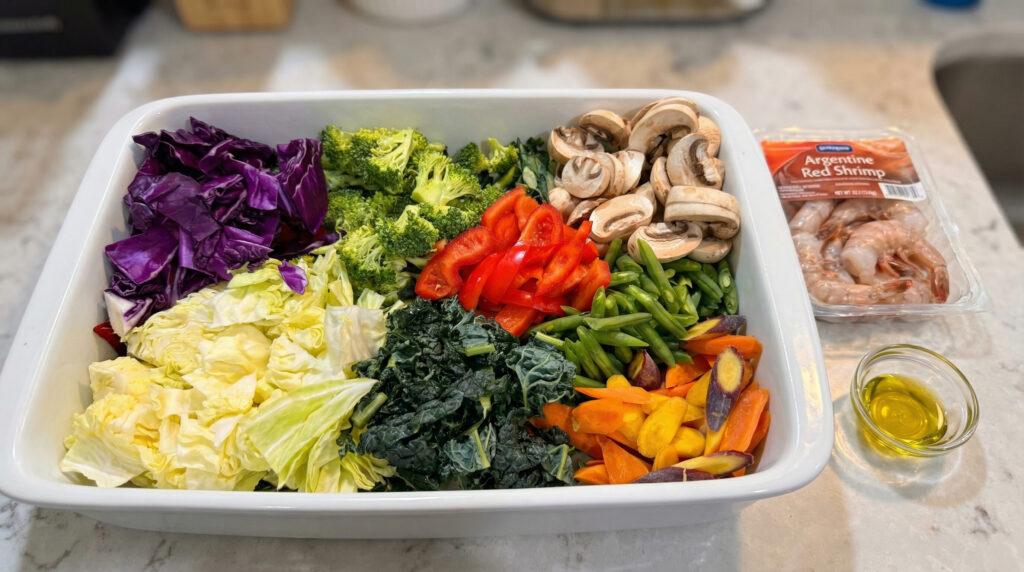
This is one of those plant-forward meals from the garden — built from whatever’s available, flexible, and deeply satisfying.
A mix of colorful vegetables, gently cooked. A little olive oil. And on this particular night, Argentine red shrimp—added not as the star, but as a complement. Simple, flexible, and deeply satisfying.
This is how I cook some days. Not by following strict recipes, but by using a repeatable method for plant-forward meals from the garden. And it’s a big part of how I stay consistent with a plant-forward lifestyle that fits real life.
Building Plant-Forward Meals from the Garden
For me, plant‑forward doesn’t mean rigid rules or perfect plates.
It means:
- Vegetables lead the meal
- Plants show up most often
- Land & sea fit in when they make sense
- Flexibility
This approach gives me room to listen to my body and my schedule. Some weeks are heavy training weeks. Some are recovery weeks. Some are busy life weeks. The structure stays steady even when the details change.
Plant forward is not a rule I follow. It is a direction I move toward. When vegetables anchor the plate, everything else falls into place more easily. The meal feels balanced without needing to calculate or measure every bite.
It also keeps food approachable. I do not need specialty ingredients or complicated steps. I need what is already in my kitchen and a simple way to bring it together.
Over time, this mindset builds consistency. Consistency builds trust. And trust makes nourishing myself feel simple instead of stressful.
Some meals are fully plant‑based. Some include fish or shrimp. What stays consistent is how the meal is built, not what it’s called.
The Whatever‑I‑Have Formula
This is the simple framework I come back to again and again.
1. Start with Vegetables (Whatever’s on Hand)
Raw, sautéed, or lightly cooked—there’s no wrong option.
Examples from this meal:
- Green & purple cabbage
- Kale (from the garden)
- Broccoli
- Carrots (from the garden)
- Mushrooms
- Green beans
- Garbanzo beans
If it’s in the fridge or garden, it counts.
2. Add Protein (Optional + Flexible)
Protein supports the meal, it doesn’t have to dominate it.
On this night, I gently cooked Argentine red shrimp in olive oil over low heat, just until opaque.
Other easy swaps:
- Beans or lentils
- Tofu or tempeh
- Eggs
- Fish
- Or no added protein at all
3. Use Fat for Flavor & Satisfaction
A little goes a long way.
My go‑to:
- Olive oil
- Sea salt
- Fresh cracked pepper
Optional extras if you feel like it:
- Garlic
- Lemon
- Chili flakes
- Fresh herbs
Nothing fancy required.
4. Keep the Cooking Gentle
This matters more than people realize.
Low to medium heat. Minimal stirring. Just enough time to soften and warm.
Vegetables stay vibrant. Protein stays tender. The meal feels nourishing, not heavy.
A Real Example from My Kitchen

This dinner came together without a recipe.
I chopped what I had, cooked sturdier vegetables first, added the tender ones last, and gently warmed the shrimp separately in olive oil.
Everything met in the pan at the end, seasoned simply.
That’s it.
No complicated steps. No special sauces. Just food that works.
Why This Works (Especially for Active Lives)
This way of cooking:
- Reduces decision fatigue
- Makes weeknight meals easier
- Supports consistent nourishment
- Encourages variety without overwhelm
For runners, walkers, and anyone who moves regularly, consistency matters more than perfection. This method makes it easier to show up fueled—without overthinking every meal.
Make It Yours
Think of this as a rhythm, not a rule.
Change the vegetables. Swap the protein. Adjust portions. Skip steps when needed.
If you open your fridge and build a meal from what’s already there—you’re doing it right.
The Takeaway
The “Whatever‑I‑Have” approach keeps food simple, flexible, and grounded in real life.
It’s not about eating perfectly. It’s about eating consistently—and in a way that supports how you live, move, and feel.
This is plant‑forward, GrowStrides style 🌱