
How to Start Running After 50 on a Plant-Forward Diet

If you’ve ever thought, “Am I too old to start running?” — you’re not alone.
Maybe your kids are grown, your schedule finally has a little breathing room, or your doctor gently suggested moving more. Or maybe you’ve watched runners glide past and wondered what it would feel like to lace up your shoes again… or for the very first time.
Here’s the truth we don’t hear often enough: starting running after 50 is not only possible — it can be one of the most rewarding decisions you make for your health. And when paired with a plant-forward diet, it can support recovery, joint health, and long-term longevity in ways that feel sustainable, not extreme.
Let’s walk through how to begin — calmly, confidently, and without pressure.
Why Running After 50 Is Different (and Absolutely Doable
Starting to run after 50 isn’t the same as starting at 25 — and that’s not a bad thing.
At this stage of life, we’re more aware of our bodies. We notice stiffness sooner. Recovery matters more. Sleep, stress, and nutrition all play bigger roles than they used to.
The key difference? We train smarter, not harder.
Running after 50 works best when it’s built on:
- Gradual progress
- Intentional recovery
- Strength and mobility support
- Nourishing food instead of restriction
You’re not chasing speed records here. You’re building consistency, confidence, and resilience — the kind that lasts for years.
How a Plant-Forward Diet Supports Runners Over 50
A plant-forward approach doesn’t mean all-or-nothing. It means leading with whole plant foods while allowing flexibility based on what works for your body.
For runners over 50, plant-forward nutrition can help support:
- Joint health through anti-inflammatory foods
- Muscle recovery with fiber-rich, nutrient-dense meals
- Heart health and longevity
- Digestive comfort, which becomes more important as we age
Think colorful vegetables, fruits, legumes, whole grains, nuts, seeds — with room for eggs, dairy, or seafood if you enjoy them.
This way of eating fuels your runs without the heaviness or rigidity of strict diet rules.
An 8-Week Beginner Running Plan (Designed for 50+ Bodies
This plan focuses on walk/run intervals — one of the safest and most effective ways to start running after 50.
Weeks 1–2: Build the Habit
- 3 days per week
- Walk 5 minutes to warm up
- Run 30 seconds, walk 2 minutes (repeat 6–8 times)
- Cool down walk 5 minutes
Weeks 3–4: Extend Gently
- Run 1 minute, walk 2 minutes
- Repeat 6–8 rounds
- Focus on relaxed breathing, not speed
Weeks 5–6: Find Your Rhythm
- Run 2 minutes, walk 2 minutes
- Repeat 5–6 rounds
- Add light strength training once per week
Weeks 7–8: Build Confidence
- Run 3 minutes, walk 2 minutes
- Repeat 4–5 rounds
- Celebrate progress — distance and pace don’t matter
Rest days are part of training. Listen to your body. If something feels off, slow down — consistency beats intensity every time.
Whole-Food Snacks for Pre- and Post-Runs
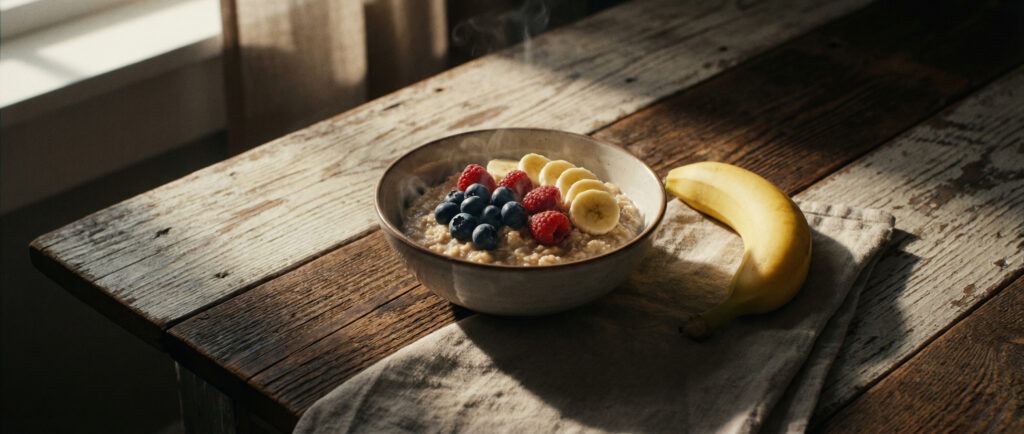
Food is fuel — especially as recovery becomes more important after 50.
Before a Run (60 – 120 minutes)
- Banana with a spoon of nut butter
- Toast with avocado
- Oatmeal with berries
- Dates or figs for quick energy
After a Run (within 60 minutes)
- Lentil or chickpea salad
- Smoothie with greens, fruit, and plant protein
- Roasted vegetables with quinoa
- Beans and brown rice with olive oil and herbs
These foods provide carbohydrates for energy, protein for muscle repair, and healthy fats for joint support — without overthinking it.
Common Mistakes New Runners Over 50 Make (and How to Avoid Them)
1. Doing Too Much, Too Soon
Excitement is great — overdoing it is not. Stick to the plan and progress slowly.
2. Skipping Strength and Mobility
Strong hips, glutes, and core protect your knees and back. Even 10 minutes twice a week helps.
3. Underfueling
Running and eating lightly don’t mix well. Fuel supports recovery, not weight gain.
4. Comparing Yourself to Others
Your pace is your pace. Progress is personal.
5. Ignoring Rest Days
Rest is when adaptation happens — especially after 50.
What You Can Do Today
You don’t need new gear, a perfect plan, or a “runner’s body” to start.
Today, you can:
- Take a 10-minute walk
- Prep one plant-forward meal
- Stretch your calves and hips
- Lay out your shoes for tomorrow
Small steps build big momentum.
You’re Not Too Old — You’re Right on Time
If you’ve been waiting for permission to start running after 50, this is it.
With a plant-forward approach to eating, a patient training plan, and a mindset rooted in curiosity rather than pressure, running can become a lifelong companion — not a punishment.
Whether you’re starting in your 50s, 60s, or beyond, GrowStrides is here to walk (and run) alongside you.
If this post resonated, share it with a friend, leave a comment, or try your first walk/run this week. Your future self will thank you.